Starting your running journey is incredibly exciting. You’ve got the motivation, maybe a new playlist, and the open road. But if you have flat feet, that excitement can quickly turn into confusion when you walk into a running shoe store (or browse online).
You’re hit with terms like “stability,” “overpronation,” and “medial post.” It’s overwhelming. The core fear for many of us starting out is: “If I pick the wrong shoe, am I going to get injured?”
Finding the best running shoes for beginners with flat feet shouldn’t require a degree in kinesiology. It’s about finding a shoe that supports your foot’s natural motion and provides the cushion you need to make those first few months of running feel comfortable, not painful.
As a fellow running enthusiast who has spent countless hours researching this exact topic, I’ve done the deep dive for you. I’m not a doctor, but I am a dedicated researcher. I’ve analyzed the tech, compared the specs, and synthesized runner feedback to find the best options available today.
This guide will break down five of the most trusted shoes that are perfect for new runners with flat arches. We’ll look at why they work, who they’re for, and who should probably keep looking.
An Important Note on Flat Feet and Running
Before we dive in, let’s get this out of the way: I’m not a medical professional. My analysis is based on my own in-depth research into shoe technology and widely reported runner experiences.
Flat feet (or “fallen arches”) often lead to something called overpronation, which is just a fancy way of saying your foot rolls excessively inward when you land. This can put extra stress on your shins, knees, and hips.
The shoes on this list are “stability” shoes, designed to help gently manage that inward roll. However, if you have persistent pain, a history of injury, or severe flat feet, your first stop should always be a doctor, podiatrist, or a qualified physical therapist. They can give you a proper diagnosis and guidance.
Top Picks At a Glance
In a hurry? Here are the 5 Best Running Shoes for Beginners with Flat Feet:
- Brooks Adrenaline GTS 23: Men / Women
- ASICS Gel-Kayano 31: Men / Women
- HOKA Arahi 7: Men / Women
- Saucony Guide 17: Men / Women
- New Balance Fresh Foam X 860v13: Men / Women
1. Brooks Adrenaline GTS 23


The Brooks Adrenaline is often called the “defacto” stability shoe, and for good reason. It’s been a bestseller for over two decades. The “GTS” stands for “Go-To-Shoe,” and for beginners with flat feet, my research shows it absolutely lives up to the name.
It strikes a fantastic balance: it’s not too soft, not too firm, and provides stability that feels supportive without being intrusive.
Key Specs (and What They Mean)
| Specification | What It Is (and What It Means for You) |
| Support Type | Stability (using “GuideRails”) |
| Cushioning | Medium-Soft (DNA LOFT v2) |
| Heel-to-Toe Drop | 12mm (This is a high drop, meaning the heel is much higher than the toe. It can help reduce strain on the Achilles tendon, which is great for beginners.) |
| Weight | ~10.1 oz (Men’s 9) / ~9.1 oz (Women’s 8) (This is an average weight for a reliable daily trainer.) |
Honest Analysis (Based on My Research)
The secret sauce of the Adrenaline GTS 23 is its GuideRails system. Unlike old-school stability shoes that used a hard block of foam (a “medial post”), GuideRails work more like bumpers on a bowling lane. They are two firm pieces of foam, one on the inside of the heel and one on the outside.
This “holistic support” is brilliant for beginners because it only provides correction when you need it.
The cushioning is DNA LOFT v2. This is Brooks’ soft-yet-responsive foam. Runner reports consistently describe it as “pleasantly cushioned” but not “mushy.” You feel protected from the pavement, but you don’t feel like you’re sinking into a pillow. This balance is key for learning your form.
Finally, the engineered air mesh upper is widely praised for being breathable and having a secure, comfortable fit. It holds your midfoot snugly while giving your toes room to move. For many people, this is the gold-standard starting point for stability running shoes for flat feet beginners.
Who It’s Great For (Pros)
- The “I Don’t Know Where to Start” Beginner: This shoe is reliable, trusted, and balances cushion and support perfectly.
- Runners Who Want “Invisible” Support: The GuideRails are there when you need them and gone when you don’t.
- Heel Strikers: The 12mm drop and segmented crash pad in the heel are built for a smooth landing if you land on your heel first.
Who Should Probably Look Elsewhere (Cons)
- The “Max Cushion” Seeker: If you want to feel like you’re running on clouds (like a HOKA), this might feel a bit too “traditional.”
- Runners Wanting a Fast/Light Shoe: This is a daily trainer, a workhorse. It’s not built for speed days.
2. ASICS Gel-Kayano 31

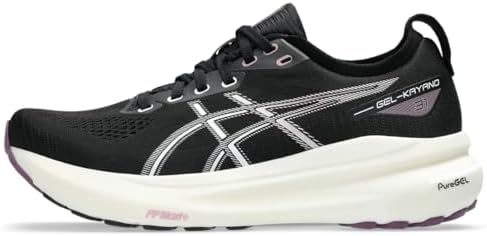
If the Brooks Adrenaline is the trusted Toyota Camry of stability shoes, the ASICS Gel-Kayano 31 is the fully-loaded Lexus. It represents the absolute latest in stability technology and premium materials.
If you’re a beginner who believes in investing in top-tier equipment from day one, my research indicates this is a hard shoe to beat.
Key Specs (and What They Mean)
| Specification | What It Is (and What It Means for You) |
| Support Type | Adaptive Stability (4D GUIDANCE SYSTEM) |
| Cushioning | Max (FF BLAST PLUS ECO & PureGEL) |
| Heel-to-Toe Drop | 10mm (A standard drop that works for most runners.) |
| Weight | ~10.7 oz (Men’s 9) / ~9.3 oz (Women’s 8) (Slightly heavier, but it’s packed with tech.) |
Honest Analysis (Based on My Research)
The Gel-Kayano line has been completely redesigned, and the 31 is a refinement of that new philosophy. The star of the show is the 4D GUIDANCE SYSTEM. This isn’t just one thing; it’s a whole-system approach.
The most important part for flat-footed runners is the new medial foam unit. It’s a piece of softer, more energetic foam placed under the arch that helps guide the foot back to a neutral position after it pronates. It’s designed to be more adaptive, working with your foot’s motion rather than just blocking it.
This is paired with a ton of FF BLAST PLUS ECO cushioning. This foam is soft, bouncy, and made with 20% bio-based content. Runner reports are universal on this: the Kayano 31 is one of the most cushioned and comfortable stability shoes on the market. It’s fantastic for absorbing the impact of road running, especially as your body is adapting.
The PureGEL unit (a softer version of their classic GEL) is hidden in the heel, adding another layer of shock absorption. This shoe is a fortress of comfort and support, making it ideal for beginners who are worried about the high-impact nature of running.
Who It’s Great For (Pros)
- The “Money Is No Object” Beginner: You want the latest and greatest technology for maximum comfort and protection.
- Runners with Significant Overpronation: The new guidance system is reported to be incredibly effective at managing moderate to severe inward roll.
- Heavier Runners: The robust cushion and support system provide excellent durability and protection.
Who Should Probably Look Elsewhere (Cons)
- Budget-Conscious Runners: This is a premium shoe with a premium price tag.
- Runners Who Want to “Feel the Road”: This shoe is all about high-cushion protection. You will feel very isolated from the ground.
3. HOKA Arahi 7
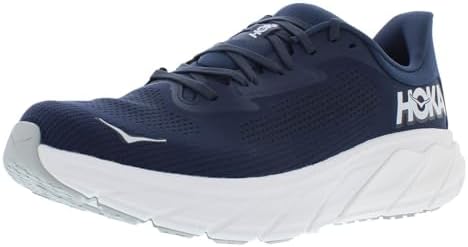

For a long time, “stability shoe” was just another word for “heavy” or “clunky.” HOKA changed that with the Arahi.
The Arahi 7 continues this tradition. It delivers HOKA’s signature maximum cushioning and smooth ride in a package that is surprisingly light for a stability shoe. This is for the beginner with flat feet who doesn’t want to feel weighed down.
Key Specs (and What They Mean)
| Specification | What It Is (and What It Means for You) |
| Support Type | Stability (J-Frame) |
| Cushioning | Medium-Firm (CMEVA Foam) |
| Heel-to-Toe Drop | 5mm (This is a low drop. It promotes a more midfoot landing but can put more load on the Achilles.) |
| Weight | ~9.9 oz (Men’s 9) / ~8.1 oz (Women’s 8) (Noticeably lighter than the Brooks and ASICS.) |
Honest Analysis (Based on My Research)
The HOKA Arahi’s magic comes from its J-Frame. Imagine a “J”-shaped hook of firmer foam that starts at your heel, wraps around the inside of your foot, and ends near your big toe.
This frame does the same job as Brooks’ GuideRails—it cradles your foot and prevents that excessive inward roll. But because it’s built into the midsole, it feels seamless. You get the stability you need for your flat arches, but the shoe still feels agile and light.
The ride itself is classic HOKA: a “rocker” geometry. This means the sole is curved, like the bottom of a rocking chair. It’s designed to encourage a smooth, rolling transition from the moment your heel strikes to the moment your toe pushes off. Many beginners find this “rolling” sensation helps their form feel more efficient.
The cushioning is a compression-molded EVA foam (CMEVA). Compared to the Kayano, it’s described by runners as being a bit firmer and more responsive. It’s still highly cushioned, but it has a little more “pop” to it. The Arahi 7 specifically features an engineered flat-knit upper, which is reported to be more breathable and secure than previous versions.
Who It’s Great For (Pros)
- Beginners Who Want a “Light” Feeling: This is one of the lightest full-support shoes you can get.
- HOKA Fans: If you’ve tried a HOKA (like the Clifton) and loved the rocker feel but need stability, this is your shoe.
- Runners Tackling Shorter, Faster Runs: Its lightweight nature makes it more versatile than heavier trainers.
Who Should Probably Look Elsewhere (Cons)
- Runners Who Need “Plush” Softness: The HOKA foam here is more “protective” than “pillowy.”
- Those Used to a High Drop: The 5mm drop can be an adjustment. It’s best to ease into it if you’re coming from 10-12mm shoes.
4. Saucony Guide 17
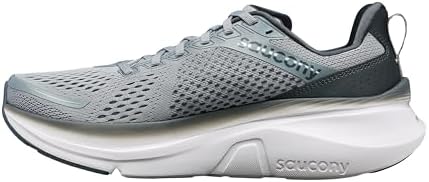
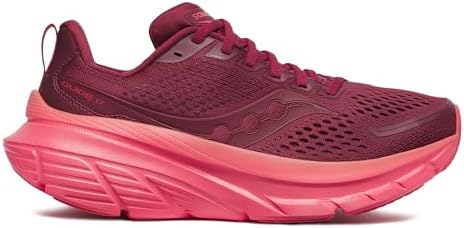
The Saucony Guide 17 represents a major update and a new way of thinking about stability. It’s moved away from traditional posts and frames and toward a more holistic, “centered” approach.
Based on my research, this shoe is perfect for the beginner with flat arches who finds other stability shoes too controlling or stiff. It focuses on guiding your foot, not forcing it.
Key Specs (and What They Mean)
| Specification | What It Is (and What It Means for You) |
| Support Type | Guidance / Centered (CenterPath Technology) |
| Cushioning | Soft (PWRRUN) |
| Heel-to-Toe Drop | 6mm (A low-to-mid drop that sits in a nice sweet spot.) |
| Weight | ~9.5 oz (Men’s 9) / ~8.1 oz (Women’s 8) (Also very light for a stability trainer.) |
Honest Analysis (Based on My Research)
With the Guide 17, Saucony threw out the old playbook. There is no medial post. Instead, they created CenterPath Technology.
Here’s what that means in plain English:
- Wider Base: The platform of the shoe is much wider than before. A wider base is inherently more stable, just like a pyramid.
- Higher Sidewalls: The foam comes up around the edges of your foot, especially in the midfoot. Your foot sits inside the cushioning, not just on top of it.
- Rocker Shape: Like the HOKA, it has a rocker geometry to help you roll through your stride smoothly.
The result is a shoe that feels incredibly secure and centered. It gently encourages your foot to land in the middle of that wide platform and roll straight forward. This is a fantastic, modern approach for beginner running shoes flat arches because it feels so natural.
The cushioning is a big stack of PWRRUN foam. This is a soft, reliable foam that runners find very comfortable for daily miles. It’s softer than the foam in the HOKA but perhaps a bit firmer than the Kayano.
This is the shoe for the beginner who wants the effects of stability (a centered, secure ride) without feeling the mechanics of it.
Who It’s Great For (Pros)
- Beginners Who Dislike “Controlling” Shoes: This shoe feels like a high-cushion neutral shoe, but with a secure, stable base.
- Runners with Mild to Moderate Overpronation: It’s perfect for guiding the foot, but may not be enough for severe overpronation.
- Walkers and Run/Walkers: The wide base and smooth rocker are exceptionally comfortable for walking.
Who Should Probably Look Elsewhere (Cons)
- Traditionalists: If you want to feel that firm support under your arch (like a medial post), this shoe won’t give you that.
- Runners Needing Aggressive Correction: If a podiatrist has told you that you need a very firm post, this more subtle approach might not be sufficient.
5. New Balance Fresh Foam X 860v13

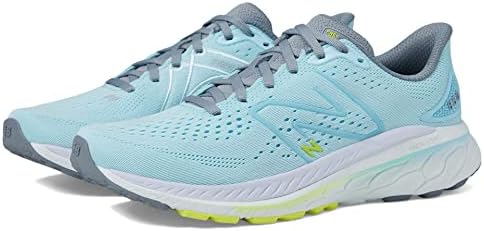
The New Balance 860 line is a classic, no-nonsense stability workhorse. It’s the “meat and potatoes” stability shoe, and I mean that as a high compliment.
The 860v13 combines New Balance’s softest mainstream foam (Fresh Foam X) with a traditional stability system. My research shows this is a top-tier choice, especially for beginners who need a softer feel or have wider feet.
(Note: A v14 is available, but the v13 is still widely available, often at a great price, and is a beloved model.)
Key Specs (and What They Mean)
| Specification | What It Is (and What It Means for You) |
| Support Type | Traditional Stability (Dual-Density Medial Post) |
| Cushioning | Soft (Fresh Foam X) |
| Heel-to-Toe Drop | 10mm (The “classic” drop, works well for most beginners.) |
| Weight | ~10.9 oz (Men’s 9) / ~8.6 oz (Women’s 8) (It’s a very solid, durable shoe.) |
Honest Analysis (Based on My Research)
Unlike the Saucony or Brooks, the New Balance 860v13 uses a dual-density medial post. This is the classic way to provide stability. It’s a piece of foam under your inner arch that is significantly firmer than the rest of the midsole.
When your foot tries to roll inward, it pushes against this firm post, which stops the roll. It’s direct, effective, and has been trusted by runners for decades. If you want flat feet running shoes arch support that you can actually feel working, this is it.
The magic of the 860v13 is that it pairs this traditional support with a very modern, soft cushioning: Fresh Foam X. The main part of the midsole is a generous layer of this plush, soft foam, which provides a comfortable and forgiving ride. You get the “ah, soft” feeling on landing, followed by the “ah, secure” feeling from the post.
One of New Balance’s greatest strengths is fit. The 860v13 is available in a huge range of widths, from Narrow (B) all the way to Extra-Extra-Wide (6E) in some models. For beginners with flat feet, which are often wider, this is a massive advantage.
Who It’s Great For (Pros)
- Runners Who Want a Soft and Stable Shoe: This is one of the best combinations of plush cushioning and traditional support.
- Beginners with Wide Feet: The extensive width options make finding a perfect fit much easier.
- Traditionalists: If you’re skeptical of new “guide” systems and want a proven medial post, this is your shoe.
Who Should Probably Look Elsewhere (Cons)
- Runners Who Find Medial Posts Intrusive: Some people find a firm post “jabs” them in the arch.
- Weight-Conscious Runners: This is the heaviest shoe on the list. It’s built for comfort and durability, not speed.
How to Choose Running Shoes for Flat Feet Beginners (A Simple Guide)
Now that you’ve seen the top picks, how do you decide? Finding the best running shoes for beginners with flat feet comes down to understanding a few key concepts.
Understand “Overpronation” (The “Why” Behind Flat Feet)
As I mentioned, flat feet often lead to overpronation. When you run, your foot is supposed to roll inward slightly to absorb shock. This is “pronation,” and it’s a good, natural thing.
“Overpronation” is when it rolls inward too much. This can misalign your leg, putting stress on your joints. Stability shoes are designed to help control this excessive roll.
Stability vs. Neutral: What’s the Difference?
- Neutral Shoes: Have no support features. They are for runners whose feet don’t overpronate.
- Stability Shoes: Have features (like GuideRails, J-Frames, or medial posts) to help control overpronation.
As a beginner with flat feet, a stability shoe is almost always the safest place to start.
Key Features to Look For (Jargon Explained)
When you’re comparing stability running shoes for flat feet beginners, you’ll see these terms. Here’s what they mean.
- Support Systems:
- Medial Post (e.g., New Balance 860): A firm wedge of foam under the arch. Very traditional and effective.
- GuideRails / Frames (e.g., Brooks Adrenaline, HOKA Arahi): “Bumpers” or “frames” that guide your foot to a neutral path. Feels more holistic.
- Wider Base / Sidewalls (e.g., Saucony Guide): A newer method that uses geometry (a wide platform) to create a stable, centered ride.
- Arch Support:
- Good flat feet running shoes arch support doesn’t just come from the insole. It comes from the entire system (the post, the sidewalls, the shape of the shoe) working to support your arch as it flexes.
- Durable Cushioning:
- As a beginner, you want a foam that is soft enough to be comfortable but durable enough to last. All the foams mentioned (DNA LOFT, FF BLAST, PWRRUN, Fresh Foam X) are top-tier and designed to handle hundreds of miles.
- A Secure Fit:
- Your heel should be locked in place (no slipping), but your toes should have room to wiggle and spread out. A poor fit can cause blisters and bunions, regardless of how good the shoe is.
Don’t Forget the “Wet Test”
A simple way to get a rough idea of your foot type at home:
- Get a piece of cardboard or a brown paper bag.
- Get your foot slightly wet.
- Step firmly onto the cardboard and then step off.
- Look at the footprint. If you see almost your entire foot (a wide, “pancake” print), you likely have flat feet.
Final Verdict: My Analysis for Beginners
So, which shoe is the one for you? Here’s my final analysis as a researcher.
Finding the best running shoes for beginners with flat feet is a personal choice, but you can’t go wrong with any of these five. They are all top-of-their-class.
- For the All-Around Best Start: Go with the Brooks Adrenaline GTS 23. It’s the most balanced, trusted, and reliable option.
- If You Want the Most Advanced Comfort: Go with the ASICS Gel-Kayano 31. The premium cushioning is unmatched, though it comes at a premium price.
- If You Want to Feel Light and Smooth: Go with the HOKA Arahi 7. The lightweight rocker and J-Frame support are a modern marvel.
- If You Want a “Forget It’s There” Feel: Go with the Saucony Guide 17. Its wide, centered platform is the new standard for “invisible” stability.
- If You Want a Soft “Pillow” with Wide Fit Options: Go with the New Balance 860v13. It’s the perfect blend of classic, firm support and modern, plush foam.
Your first pair of running shoes is a big deal. It’s the tool that will carry you through your first milestones. My research shows these shoes provide the support and comfort to make that journey a lot more enjoyable.
Happy running!
Frequently Asked Questions
1. Do I absolutely need stability shoes if I have flat feet?
Not always, but it’s the safest place to start. Some flat-footed runners have “flexible” arches that are strong and don’t overpronate. However, for most beginners, the support from a stability shoe is crucial for preventing common injuries (like shin splints) as your body adapts to the new stress of running.
2. Can I use these running shoes for walking or for the gym?
You can definitely use them for walking! They are exceptionally comfortable and supportive for all-day wear. For the gym, they are fine for treadmills or ellipticals. However, I wouldn’t recommend them for heavy weightlifting (like squats or deadlifts) because the soft, high cushioning can be unstable on a lateral (side-to-side) basis.
3. How often should a beginner with flat feet replace their running shoes?
The general rule for all running shoes is to replace them every 300-500 miles. As a beginner, you might not be tracking miles, so a good timeframe is every 6-8 months if you’re running 2-3 times per week. A key sign: if the shoes suddenly feel “flat” or “dead,” or if you start to feel new aches in your shins or knees, the foam has likely broken down.
4. What’s the difference between “stability” and “motion control” shoes?
Think of it as a spectrum. Stability shoes (like all the ones on this list) are for mild to moderate overpronation. They use modern features like GuideRails or gentle posts. Motion control shoes are the “heavy-duty” option. They are much stiffer, wider, and designed for severe overpronation or very heavy runners. For 95% of beginners, a stability shoe is the correct choice.
5. Will these shoes “fix” my flat feet?
No. Running shoes are tools, not medical treatments. They won’t change the structure of your foot. What they will do is support your foot and align your leg properly while you are running, which reduces stress and prevents injury. To “fix” or strengthen your feet, you should see a physical therapist for specific foot-strengthening exercises.